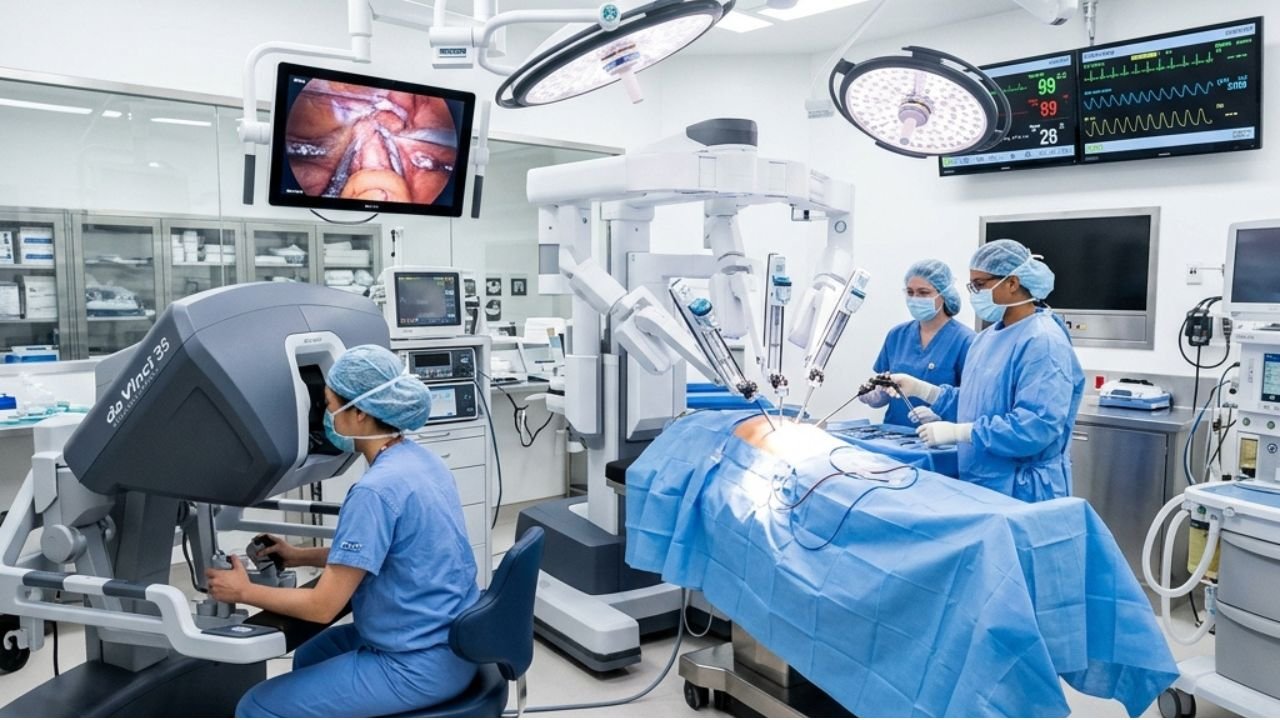
Robotic surgery is now available at hundreds of U.S. hospitals, but outcomes vary significantly based on surgeon experience, procedure volume, and technology infrastructure. The best hospitals for robotic surgery include Mayo Clinic, Johns Hopkins, Cleveland Clinic, and UCSF Medical Center, each recognized for high procedure volumes, specialized surgical teams, and strong patient safety records.
Robotic surgery has moved from experimental to mainstream faster than almost any other medical innovation in recent history. According to Intuitive Surgical—the company behind the widely used da Vinci Surgical System—more than 1.5 million robotic procedures are performed in the United States each year. That number continues to climb.
For patients, the appeal is clear. Robotic-assisted surgery typically delivers greater precision, smaller incisions, less blood loss, and faster recovery times compared to traditional open surgery. A 2022 study published in JAMA Surgery found that robotic procedures for certain cancer surgeries resulted in significantly lower complication rates and shorter hospital stays than conventional laparoscopic approaches.
But here’s what most patients don’t fully appreciate: the hospital and surgeon you choose matter just as much as the technology itself. A robotic system is only as good as the hands—and the training—guiding it. This guide breaks down what robotic surgery is, how to evaluate hospitals, and which institutions lead the country for specific procedures.
What Is Robotic Surgery and How Does It Work?
Robotic surgery, more precisely called robotic-assisted minimally invasive surgery, uses a computer-controlled system to help surgeons perform complex procedures through tiny incisions. The surgeon sits at a console a few feet from the patient, manipulating hand and foot controls that translate their movements into precise actions performed by robotic arms.
The da Vinci Surgical System, manufactured by Intuitive Surgical, dominates the U.S. market and is FDA-cleared for a wide range of procedures. Competing platforms are gaining ground—Medtronic’s Hugo™ RAS System and Johnson & Johnson’s Ottava system (currently in development) represent the next wave of competition that is pushing innovation across the board.
What sets robotic systems apart from standard laparoscopic surgery is the enhanced visualization and degrees of motion. Surgeons work with a 3D, high-definition view of the surgical site, and robotic instruments can rotate 360 degrees—far exceeding the range of the human wrist. For delicate procedures near nerves and major blood vessels, that difference is significant.
What Criteria Should You Use to Evaluate Top Robotic Surgery Hospitals?
Not all robotic surgery programs are equal. Here’s what separates genuinely excellent programs from those simply marketing the technology:
How important is surgeon experience and procedure volume?
Surgical outcomes are strongly correlated with volume. Hospitals and surgeons who perform higher numbers of a given procedure each year tend to have lower complication rates and better long-term results. The American College of Surgeons recommends looking for surgeons who perform a minimum of 25–50 robotic procedures annually in their specific specialty, though leading programs often far exceed this.
What accreditations should a top robotic surgery hospital have?
The Joint Commission’s Disease-Specific Care Certification is one benchmark worth checking. For cancer-related robotic procedures, designation as an NCI-designated Comprehensive Cancer Center signals a higher standard of multidisciplinary care. Magnet Recognition from the American Nurses Credentialing Center reflects nursing excellence, which directly impacts postoperative outcomes.
What role does technology infrastructure play in patient outcomes?
Hospitals that regularly update their robotic platforms and invest in simulation training for their surgical teams demonstrate an institutional commitment to the field. Look for programs that use the latest generation of the da Vinci system (the da Vinci Xi or da Vinci 5, launched in 2024) and that offer dedicated robotic surgery training labs for their residents and fellows.
How do patient safety records factor into choosing a robotic surgery hospital?
The Agency for Healthcare Research and Quality (AHRQ) publishes hospital safety data, and the Leapfrog Group provides annual Hospital Safety Grades. Cross-referencing a hospital’s robotic surgery volume with its broader safety record gives a fuller picture than any single metric alone.
Which Are the Best Hospitals for Robotic Surgery by Region?
Northeast: Leading Institutions and Their Specialties
Johns Hopkins Hospital (Baltimore, MD) consistently ranks among the nation’s best, with its robotic urology and gynecologic oncology programs earning particular recognition. The Brady Urological Institute at Hopkins has been a pioneer in robotic prostatectomy since the technology’s early days.
Memorial Sloan Kettering Cancer Center (New York, NY) is the country’s leading cancer hospital and performs a high volume of robotic procedures for prostate, colorectal, and thoracic cancers. Its surgical volumes for oncological robotic procedures are among the highest in the nation.
Massachusetts General Hospital (Boston, MA) offers advanced robotic programs across multiple specialties, with notable strength in thoracic and gastrointestinal surgery.
Southeast: Premier Robotic Surgery Centers
Mayo Clinic’s Jacksonville Campus (Jacksonville, FL) brings the same rigorous multidisciplinary approach as its Minnesota flagship, with strong robotic programs in urology, gynecology, and colorectal surgery.
Emory University Hospital (Atlanta, GA) has built a nationally recognized robotic cardiac surgery program and offers one of the Southeast’s highest-volume robotic procedure centers.
Midwest: High-Volume Robotic Surgery Programs
Mayo Clinic Rochester (Rochester, MN) remains one of the most trusted names in American medicine. Its robotic surgery program spans nearly every surgical specialty, and its outcomes data is consistently strong across procedure types.
Cleveland Clinic (Cleveland, OH) is a leader in robotic cardiac procedures and urological surgery. Cleveland Clinic’s Glickman Urological & Kidney Institute is frequently cited as one of the best in the world for robotic prostatectomy.
Southwest: Advanced Surgical Facilities
UT Southwestern Medical Center (Dallas, TX) is an NCI-designated comprehensive cancer center with a high-volume robotic oncology program. Its robotic surgery training infrastructure supports one of the region’s most experienced surgical teams.
Banner University Medical Center (Tucson, AZ) leads the Southwest in robotic thoracic and bariatric surgery, offering programs backed by University of Arizona Health Sciences.
West Coast: Innovation Hubs and Cutting-Edge Programs
UCSF Medical Center (San Francisco, CA) is consistently ranked among the top five hospitals in the country and offers advanced robotic programs in urology, gynecology, thoracic surgery, and oncology. Its proximity to Silicon Valley has shaped a culture of early technology adoption.
Cedars-Sinai Medical Center (Los Angeles, CA) has one of the largest robotic surgery programs in California, with particular strength in cardiac and colorectal procedures.
UCLA Health (Los Angeles, CA) rounds out the West Coast with nationally recognized robotic urological and gynecologic oncology programs.
Which Hospitals Lead in Specific Robotic Surgery Specialties?
Robotic Prostatectomy and Urological Procedures
Cleveland Clinic and Johns Hopkins Hospital lead the country in robotic prostatectomy volume and outcomes. Both institutions report nerve-sparing success rates and continence recovery data that exceed national averages. For kidney cancer and complex ureteral reconstruction, UCSF and Mayo Clinic Rochester are equally strong options.
Robotic Hysterectomy and Gynecological Surgery
For gynecologic oncology, Memorial Sloan Kettering and MD Anderson Cancer Center (Houston, TX) are the top choices for cancer-related robotic hysterectomy. For benign conditions like fibroids or endometriosis, Mayo Clinic, Cleveland Clinic, and Brigham and Women’s Hospital (Boston, MA) have high-volume, experienced teams.
Robotic Cardiac Procedures
Robotic cardiac surgery remains one of the most technically demanding applications of the technology. Emory University Hospital and Cleveland Clinic’s Heart, Vascular & Thoracic Institute are recognized leaders. The Robotic Cardiac Surgery Program at Cedars-Sinai has also gained national recognition for minimally invasive mitral valve repair.
Robotic Colorectal and General Surgery
Mayo Clinic Rochester and UCSF Medical Center are frequently cited for their robotic colorectal programs. For inflammatory bowel disease and complex rectal cancer surgery, Memorial Sloan Kettering’s colorectal team is among the most experienced in the world.
Robotic Thoracic Surgery
For lung cancer resections and other thoracic procedures, Massachusetts General Hospital and MD Anderson Cancer Center rank at the top. Both programs combine high surgical volume with dedicated thoracic oncology teams.
How to Choose the Right Hospital for Your Robotic Surgery Needs
How should you research surgeon credentials for robotic surgery?
Start with board certification and fellowship training. Look for surgeons who completed fellowships specifically in minimally invasive or robotic surgery, and check whether they are proctor-certified on the robotic platform they’ll use. Many hospitals publish their surgeons’ individual case volumes upon request—don’t hesitate to ask.
Where can you find reliable hospital safety and outcome data?
The Leapfrog Hospital Safety Grade (available at hospitalsafetygrade.org) and the CMS Hospital Compare tool are two free, publicly accessible resources. For cancer-specific procedures, the National Cancer Database (NCDB) publishes outcome data that allows for hospital-level comparisons.
What should patients consider about location and travel logistics?
For high-risk or complex procedures, traveling to a high-volume center is often worth the inconvenience. Many leading hospitals offer telemedicine consultations, making it easier to evaluate options before committing to travel. Some institutions, including Mayo Clinic and Cleveland Clinic, have concierge services specifically designed to support out-of-state patients.
How does insurance coverage affect which robotic surgery hospital you can access?
Robotic procedures are generally covered by major insurance plans when medically necessary, but in-network status varies by institution. Contact your insurer before scheduling consultations, and ask hospitals about financial counseling services. Institutions like Johns Hopkins and UCSF have dedicated financial navigation programs for patients.
Making the Right Choice for Advanced Robotic Surgery
Robotic surgery is one of the most significant advances in modern medicine—but the technology alone doesn’t determine outcomes. The hospital’s commitment to training, the surgeon’s experience, the quality of postoperative care, and the institution’s culture of patient safety all play equally important roles.
The hospitals highlighted in this guide—Mayo Clinic, Johns Hopkins, Cleveland Clinic, Memorial Sloan Kettering, UCSF Medical Center, and others—represent the current standard of excellence in the United States. Each has earned its reputation through sustained investment in both technology and talent.
As the field continues to evolve—with AI-assisted surgical guidance, haptic feedback systems, and next-generation robotic platforms in development—these leading institutions are also the most likely to offer patients access to emerging innovations. For anyone facing a procedure where robotic surgery is an option, the effort spent researching and choosing the right hospital is time very well spent.
Frequently Asked Questions About Robotic Surgery in the USA
What is the most common robotic surgery performed in the USA?
Robotic prostatectomy (surgical removal of the prostate) is the most commonly performed robotic procedure in the United States, followed by robotic hysterectomy and robotic colectomy.
Is robotic surgery safer than traditional surgery?
For many procedures, robotic surgery is associated with lower complication rates, reduced blood loss, and faster recovery compared to open surgery. However, outcomes depend heavily on surgeon experience and hospital volume—robotic surgery at a low-volume center may not outperform traditional surgery at a high-volume one.
How do I find out how many robotic surgeries a specific surgeon has performed?
Ask the surgeon directly during a consultation. Most experienced robotic surgeons are willing to share their case volume and outcomes data. You can also ask the hospital’s patient services department for this information.
Which hospital is ranked number one for robotic surgery in the USA?
No single hospital holds the top spot across all robotic surgery specialties. Mayo Clinic Rochester, Johns Hopkins Hospital, and Cleveland Clinic consistently appear at the top of national rankings for robotic surgery overall, but the best choice depends on the specific procedure needed.
Does insurance cover robotic surgery?
Most major insurance plans, including Medicare, cover robotic surgery when it is deemed medically necessary. Coverage specifics vary by plan and procedure, so patients should confirm in-network status and pre-authorization requirements before scheduling.
What questions should I ask a surgeon before robotic surgery?
Key questions include: How many of this specific procedure have you performed robotically? What is your personal complication rate? Will you perform the entire operation, or will residents assist? What does postoperative recovery typically look like?